
Concerns with the rhythms of nature
An unnecessary defense of modern art

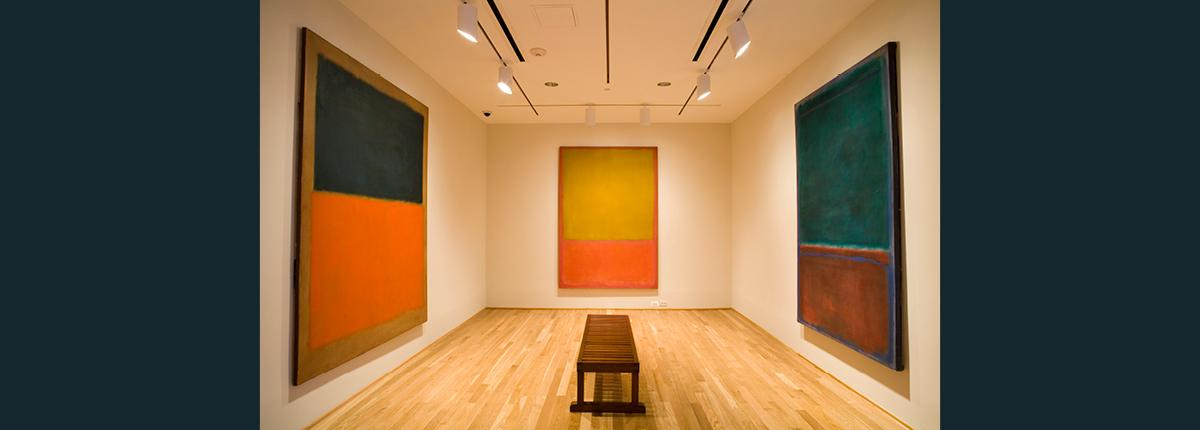
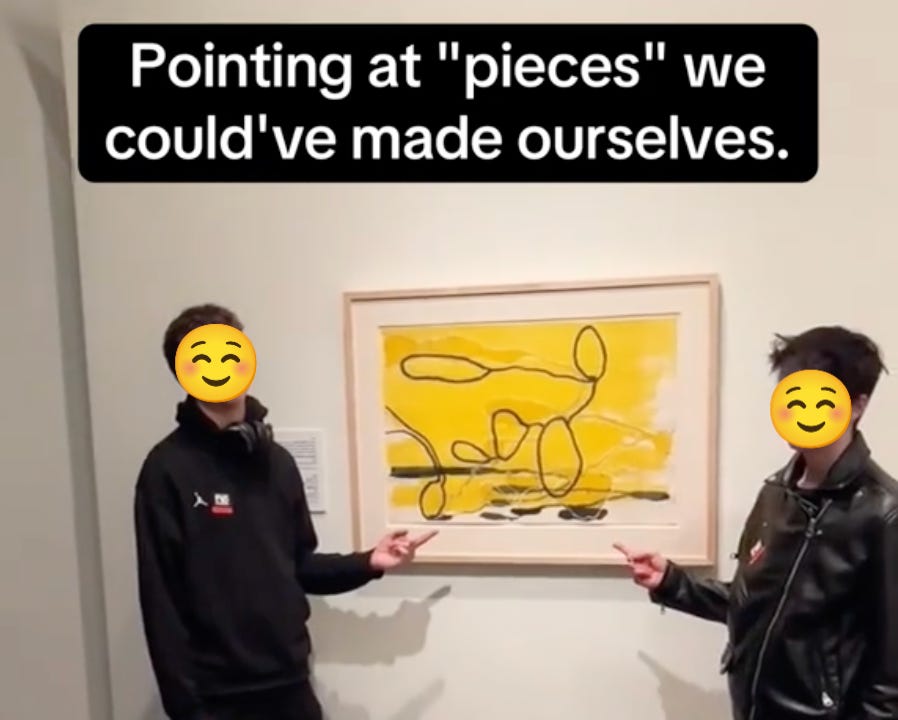
You may have seen the same videos pop up on your feed: young adults strolling around museums, rolling their eyes and making obscene hand gestures in the direction of modern art.
If the point of art were to faithfully reproduce what the eye can see, we’d still be staring at bowls of fruit. We’d line them up on tables, nice and still, in appreciation of their shadows, lines, and textures. We would get very good at watching how daylight catches a grape, the gentle bruising on the pear, the dimples on brownest banana. And then we would die with the divine knowledge that heaven is a fruit salad.
Conjure the familiar complaint: “I don’t understand what’s hard about this. My kid could paint that.” Their meaning: “If I cannot see the effort, the effort does not exist.”
I have no patience for this argument; it is wrong historically, wrong philosophically, and, as I hope to point out, wrong technically (the best kind of wrong).
Let’s begin with history. Classical art was not, despite the insistence of armchair art critics, primarily concerned with realism. I love Caravaggio; look how he weaponized light and shadow to make you feel the violence of a beheading before your brain can actually process his composition.
Consider El Greco, who stretched his figures into alien proportions because what he was evoking was a spiritual ecstasy that demanded superhuman shapes. We are not in the domain of man; we are seeking Godhood.
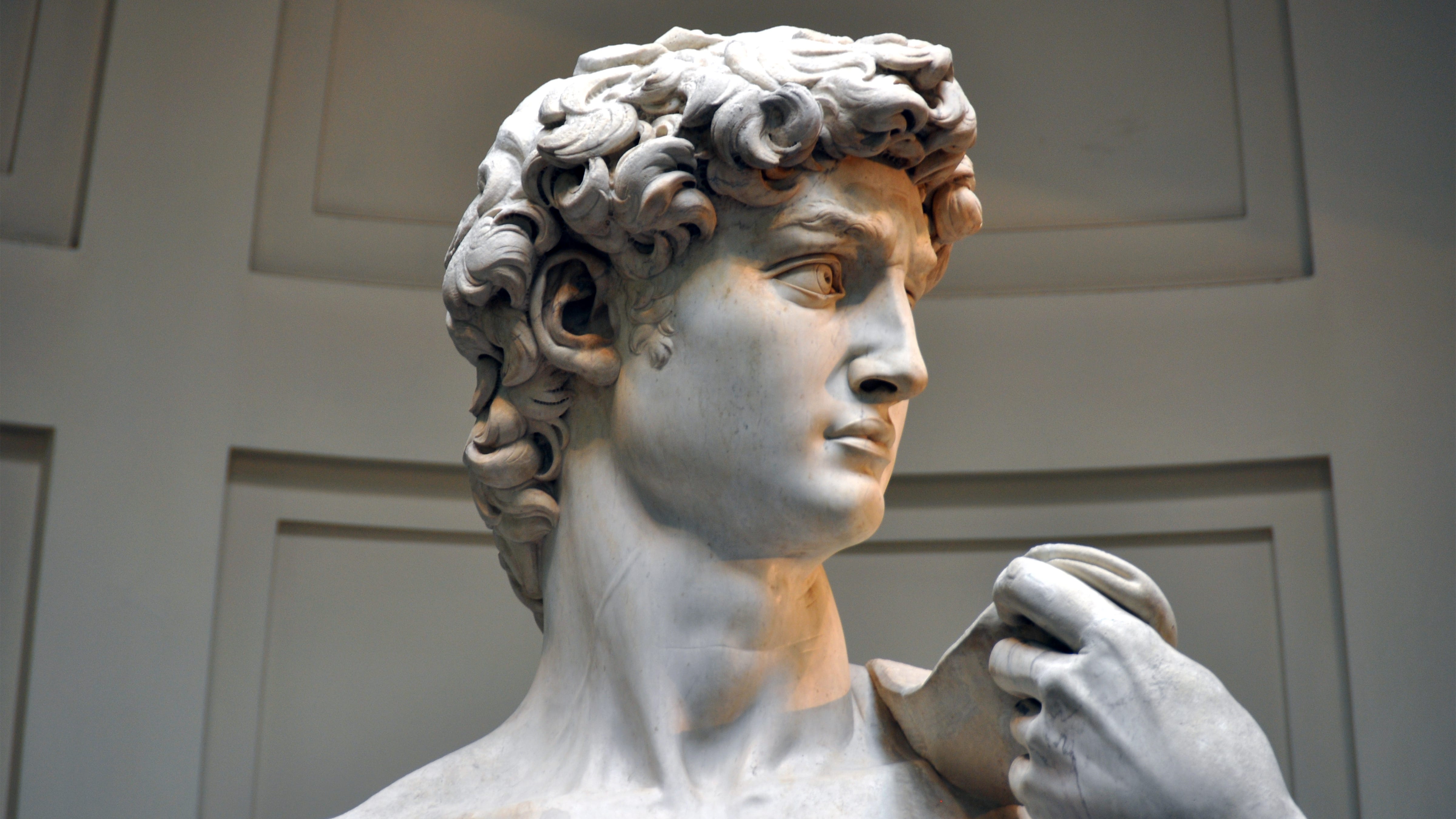
Let’s take something that many believe is the Platonic ideal of real: Michelangelo’s David. Look carefully at his hands and his face. That is not what a man looks like (as I insist regularly to my wife). You see, the David was designed to be stood up on a pillar many feet off the ground. Michelangelo had to consider what he wanted you and me, mere mortals on the soiled ground, when we looked upon his visage. And so David’s proportions are deliberately wrong; his hands are massive, his gaze bright and steady. We are staring upwards not at a mortal, but at Triumph.
When the camera was invented in the mid-19th century, the artist’s monopoly on visual reproduction was suddenly gone. Did art shut down? Did the painters put away their brushes, the sculptors toss aside their clay, and quietly fade into antiquity?
No: art exploded. Impressionism, Post-Impressionism, Cubism, Surrealism, Abstraction. Why?
Modern art is the answer to the question “What is art for if not accurate representation?” The answer turns out to be everything else: emotion, confrontation, tension, interiority, dissent. Too much for a single bowl of fruit to hold.
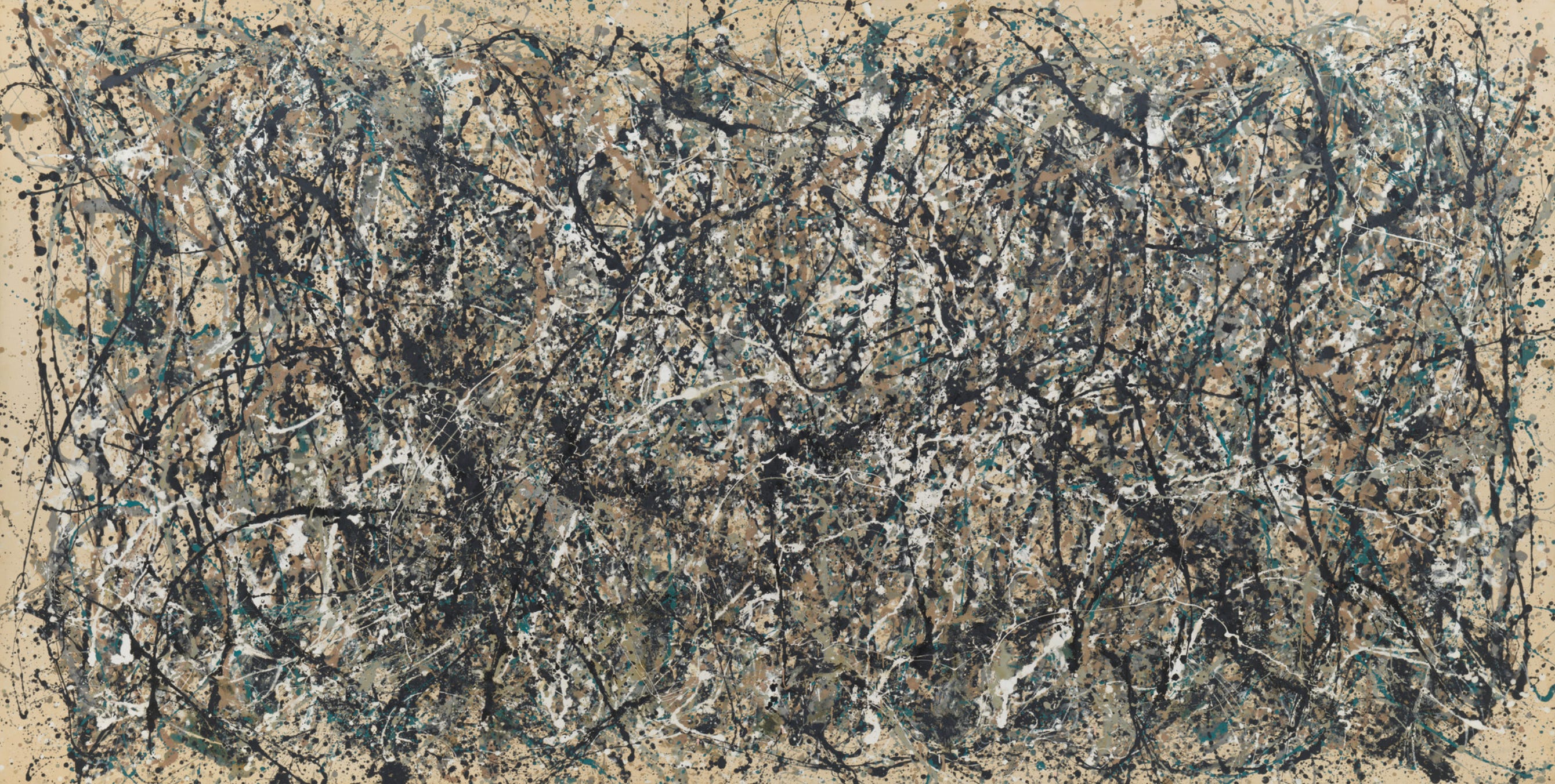
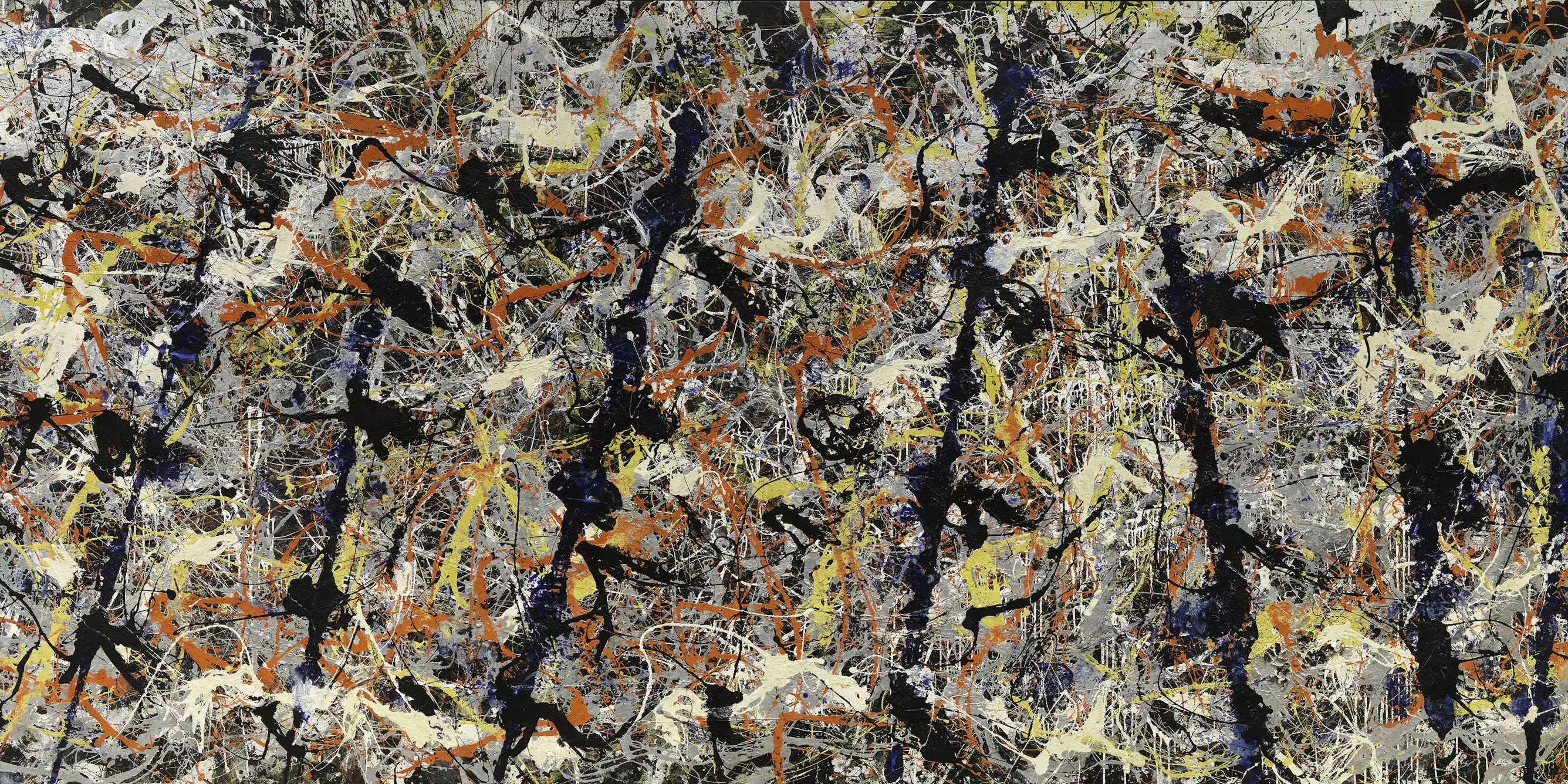
One of my favorite places in the world is in front of Jackson Pollock’s “One: Number 31, 1950” which takes up an entire wall on the fourth floor of the MoMA. I include the screenshot so you know what to look for when you go (do go), and not because it does it a hair of justice. To have any hope of appreciating Number 31, you must go there on a quiet morning and fall into it with your eyes.
If you know nothing about Pollock, all you may see is chaos. Proof that they’ll put anything in a gallery. And yet there’s some order underneath.
In 1999, the physicist Richard Taylor published a paper in Nature, that argued that Pollock’s drip paintings are actually similar to fractals.1

Forests are fractal; a tree’s trunk splits into limbs, limbs into branches, branches into twigs. The silhouette of a single tree mirrors the canopy pattern of the forest. In his research, Taylor showed that Pollock developed fractals in his art systematically. They emerged in the first few minutes of painting. Then Pollock spent months on layering and refinement. His later paintings, such as Blue Poles, have some of the highest fractal dimensions. They are also the ones observers tend to prefer.
Is preference measurable? Researchers went on to use tools like eye tracking, skin conductance, and EEG to investigate.2 What they found was that Pollock’s paintings induce a familiar physiological response in us: relaxation. We chill out. Other mid-range fractals have the same effect: trees, clouds, coastlines. They turn some invisible key inside of us. The feeling of coming home.
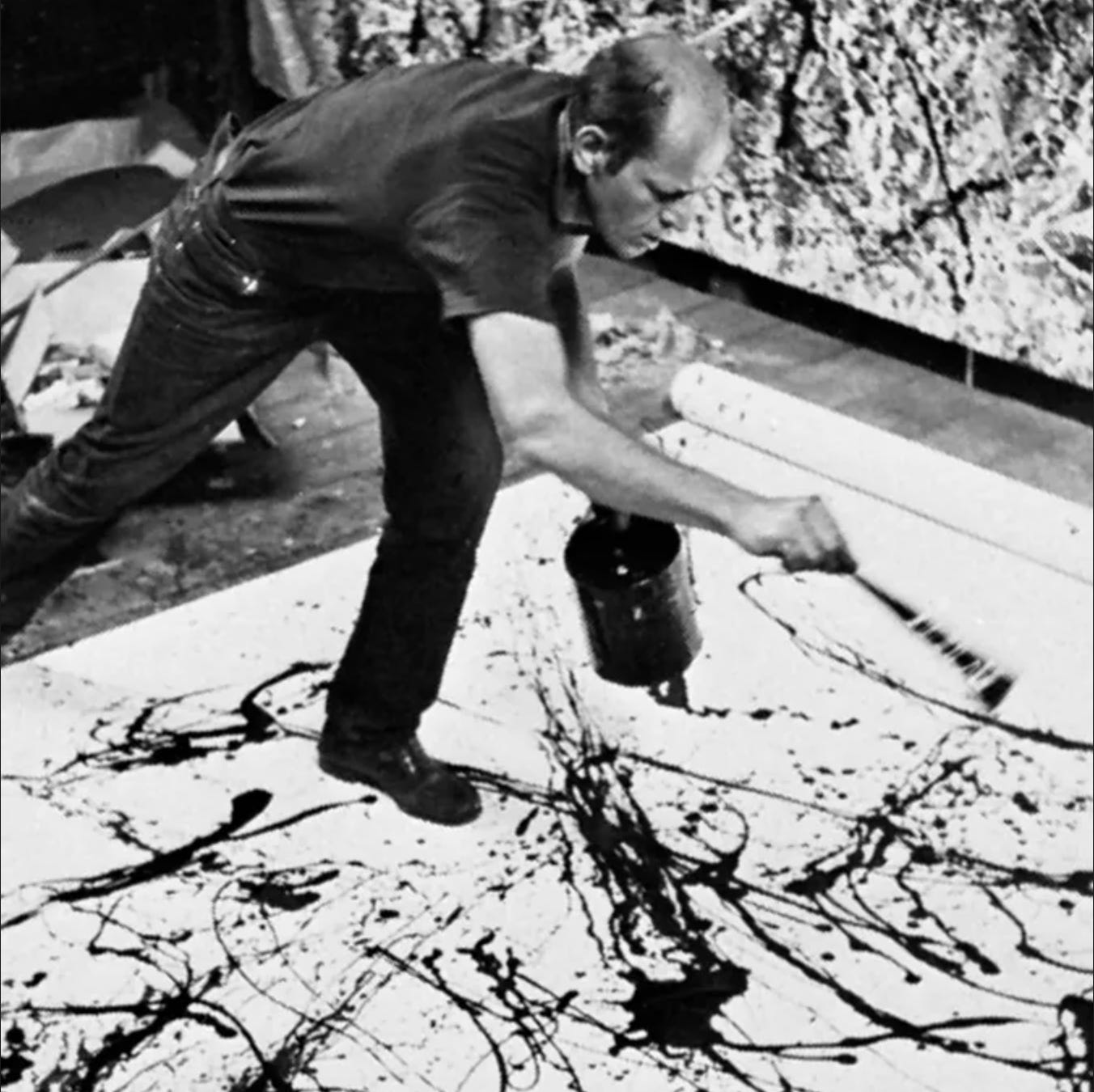
Pollock understood. He once famously said, “My concern is with the rhythms of nature.” When Time magazine ran a piece calling his work “chaotic,” he wired back: “NO CHAOS DAMN IT.” He refused to draw fruit; instead he drew their essence.3
When I’m standing in front of Number 31, I feel connected to something innate. I’m looking into a forest unlike any on Earth. If I reach out to touch it, it may touch back.
In Kurt Vonnegut’s Breakfast of Champions, the fine people of Midland City commission the painter Rabo Karabekian for a hefty $50,000. What he delivered was a massive, avocado-green rectangle adorned with a single fluorescent orange stripe.
They were, as you can imagine, pissed. To save his own hide, Karabekian explains the intention behind his masterwork in a grand speech—and makes converts of the mob:
“All you had to do was explain,” said Bonnie MacMahon. “I understand now.”
“I didn’t think there was anything to explain,” said Carlo Maritino, the builder, wonderingly. “But there was, by God.”
Abe Cohen, the jeweler, said to Karabekian, “If artists would explain more, people would like art more. You realize that?”

Pollock didn’t start off as an abstract artist. He spent years as a figurative painter. Only after that, after Benton, after the influence of Picasso, after Jungian analysis and Mexican muralism, did he have a long reckoning with his canvas. You can judge only what you see there, but that erases the biography. In other words, the process of art is as important as the product. And what modern art demands of us is to engage with that process. Channel our inner Bonnie MacMahon.
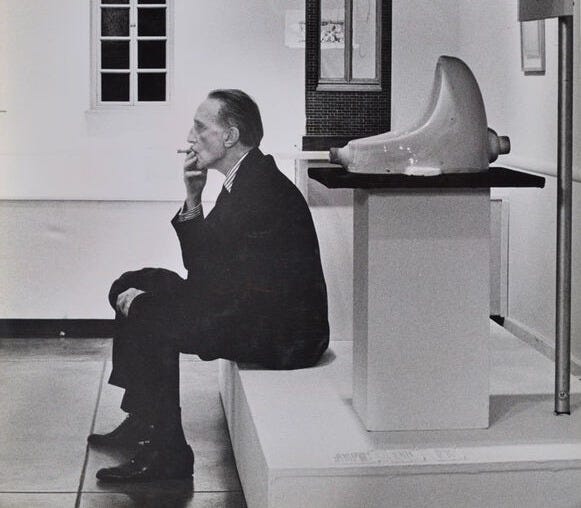
Duchamp’s “Fountain” is one of the most important artworks of the 20th century because it detonated the question of what beauty is. Provocation is its design. And so the young adults mocking art on camera are ultimately performing the intended provocation. Mockery is a tool of engagement. It proves the art works as intended.
Mockery is preferred to apathy, but it’s still a poor tool. It’s the one you reach for when vulnerability and introspection are either hard to wield or out of reach. It’s a comfort when you’re confronted with something you don’t understand, and the world you grew up in has taught you that not understanding is weakness.
I empathize with these kids. The safest posture is irony, and sometimes you need to feel safe. “It’s not that serious, bro” is a complete philosophy. It is defensive, and there’s a lot to want to defend yourself against. Such as a culture that treats confusion as failure rather than the beginning of something.
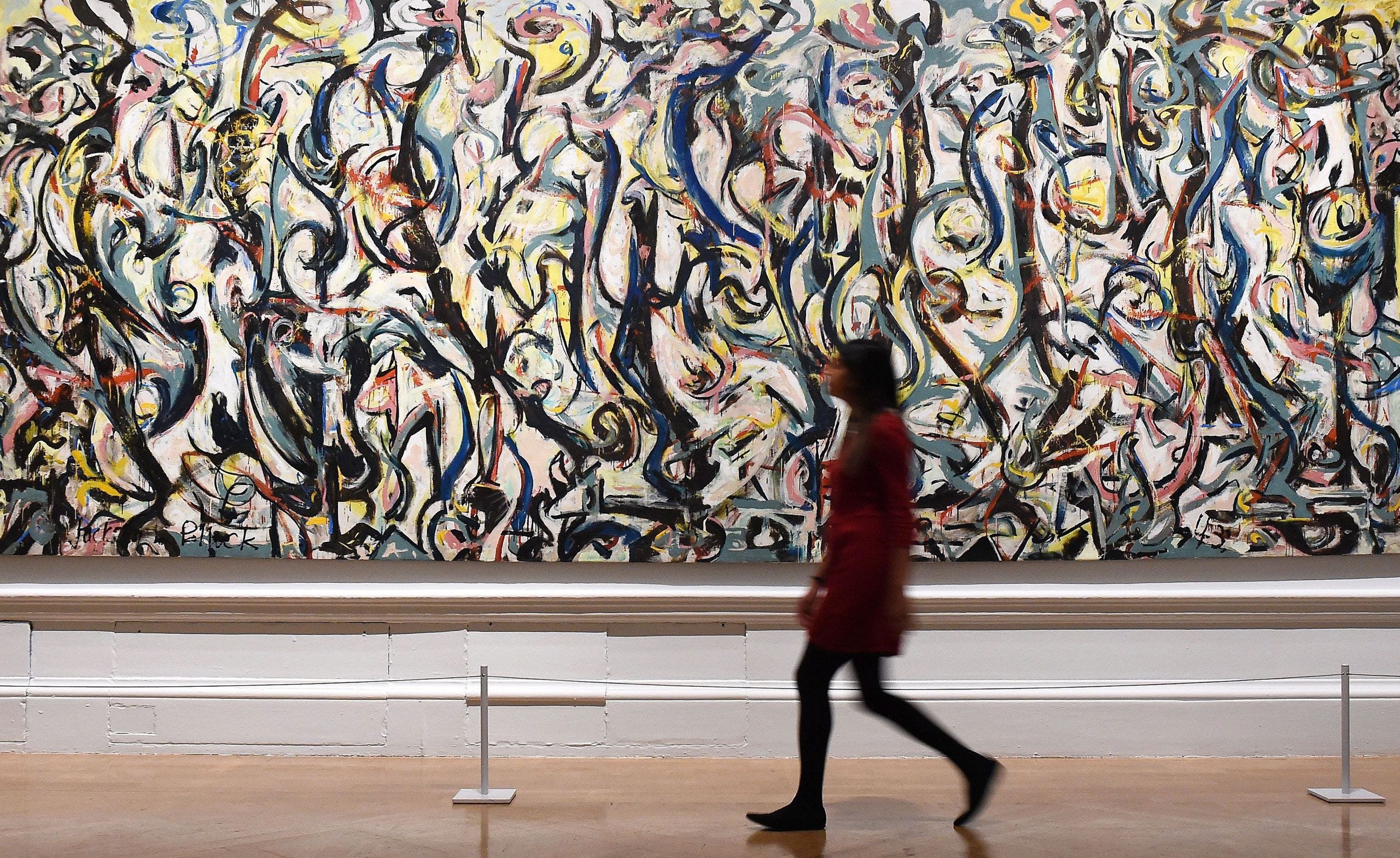
“My kid could paint that” is not a statement about art, it’s a sign about the observer. Maybe they were never offered context, or given permission to stand in a room and feel something without needing to perform. Their kid maybe could’ve painted that, but they didn’t. What will they make instead?
I want my own kids to feel comfortable sitting with the discomfort that precedes understanding. I want them to have permission to not know things, to feel things without having to name it. To let things be difficult without being hurtful. To be better at all these things than their dad.
Taylor, et al., “Fractal analysis of Pollock’s drip paintings,” Nature, vol. 399, p. 422 (1999).
Taylor, et al., "Perceptual and Physiological Responses to Jackson Pollock's Fractals," Frontiers in Human Neuroscience, vol. 5 (2011).
Leonhard Emmerling, Jackson Pollock: 1912-1956 (Taschen, 2003), p. 48.; Pepe Karmel and Jackson Pollock, Jackson Pollock: Key Interviews, Articles, and Reviews (MoMA Publishing, 2001)